Uttarakhand to implement UCC tomorrow: How the bill will impact marriage, divorce, polygamy, inheritance laws-
If UCC is implemented, BJP-ruled Uttarakhand will become the first State in the country after Independence to adopt it. So, here are key provisions of UCC
Total Views |


Dehradun, Feb 5: In a huge development, the Uttarakhand government will table the Uniform Civil Code (UCC) tomorrow during the ongoing four-day session in the Uttarakhand Assembly. Earlier on Sunday, the Uttarakhand Cabinet approved the final draft of the UCC. "Today in the Cabinet meeting, we passed the proposal to bring the legislation on the Uniform Civil Code in the upcoming Assembly session," Chief Minister Pushkar Singh Dhami said after chairing the meeting at his official residence on Sunday.
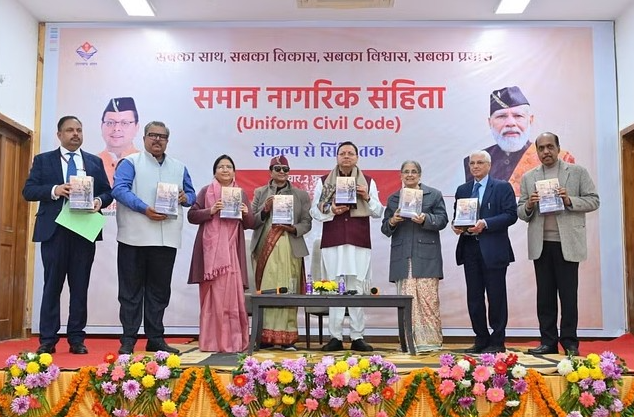
The Assembly session has been convened especially to pass the legislation on the UCC and make it an Act. The Cabinet's approval of the draft was needed for its introduction in the Assembly. If UCC is implemented, BJP-ruled Uttarakhand will become the first State in the country after Independence to adopt it. A UCC has been operational in Goa since the days of the Portuguese rule.
The 800-final draft of the UCC was submitted to Chief Minister Dhami here recently by a five-member panel headed by retired judge of the Supreme Court Ranjana Prakash Desai. It recommends focusing on women's empowerment, including banning polygamy and forming a uniform marriage age across religions. Moreover, practices such as Halala, Iddat, and Triple Talaq under Muslim personal law will be punishable offences in the report submitted by the panel. The UCC is likely to regulate live-in relationships.
Here are key provisions of UCC-
1. Marriage: If UCC is adopted, practices such as contract marriage (mutah), Nikah halala, misyar marriage, and polygamy would likely become ineffective. Existing laws like the Hindu Marriage Act (1955) and the Hindu Succession Act (1956) would be dissolved and incorporated into the UCC. The UCC draft also suggests a fixed age for marriage for men and women including the minimum marriage age under the Shariat law would be changed.
3. Polygamy: At present, a Muslim man has the right to marry four women at a time, but their women counterparts cannot do so. The UCC, however, will end polygamy, which means the Muslim man will lose his right to legally marry four different women.
4. Equal Property Rights & Inheritance Laws: The UCC envisages a common law property and inheritance laws for all citizens irrespective of their religion or gender in the state. It also ensures equal rights in property for both sons and daughters, regardless of their category. It has been stated that women, irrespective of their religion will have equal rights to their father’s property.
5. Live-In Relationships: The draft UCC has also proposed that live-in relationships are made legal but ensure mandatory registration of such couples.
6. Adoption: The UCC will bring uniformity, which means, communities, which were currently not allowed to legally adopt a child, may be given such an option. At present, the Hindu Adoption and Maintenance Act (1956) is meant only for Hindus, Jains, Sikhs and Buddhists.
Once the Uttarakhand Assembly approves the final draft in the session beginning today, the Bill would become a “model” for other states such as Gujarat and Assam to adopt.